Earthquakes/tsunamis of the Southern Vanuatu arc


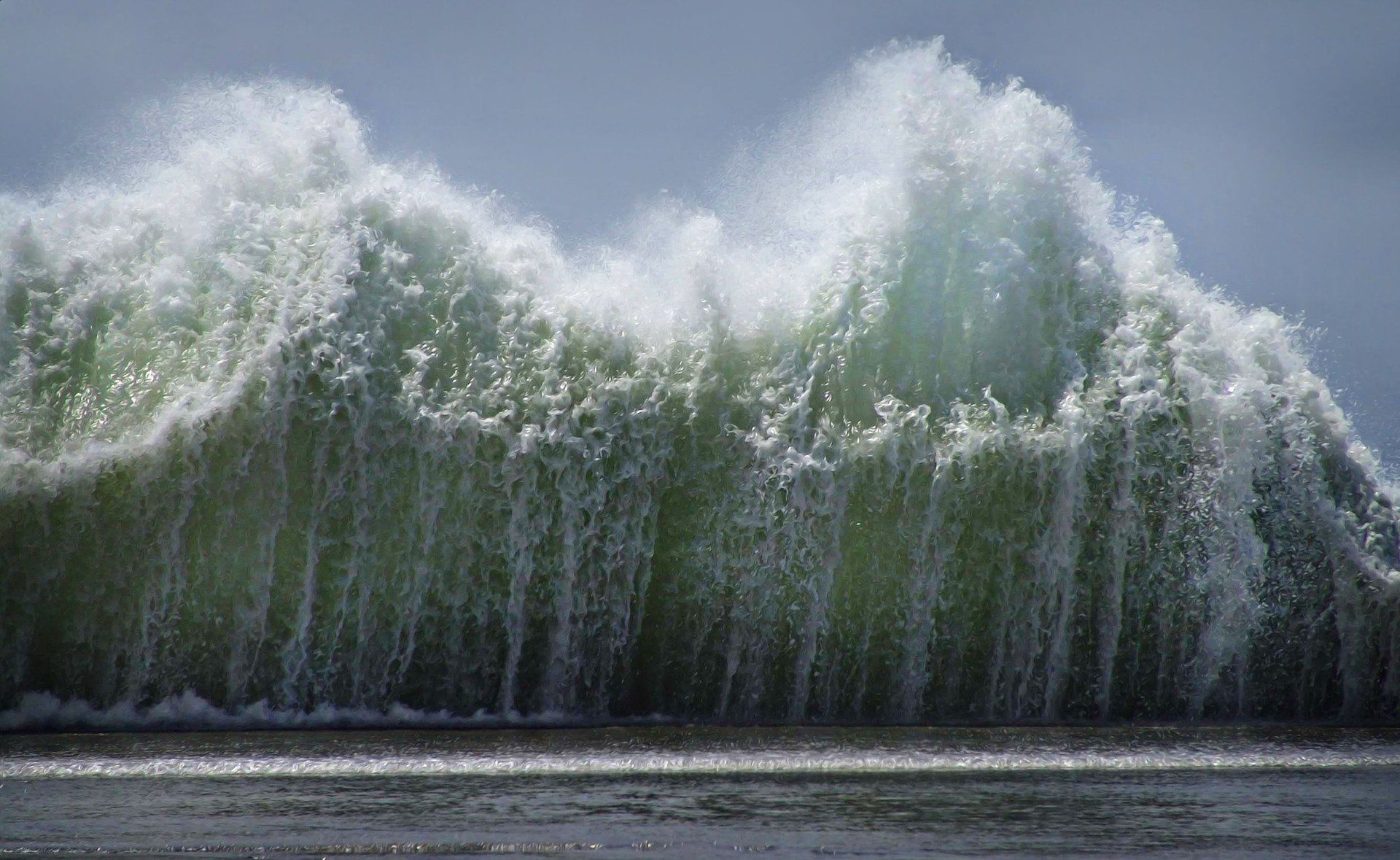
A large wave is breaking in the ocean on a cloudy day.

The Vanuatu subduction zone is known for its high level of seismic activity, where the Australian Plate is subducted beneath the Vanuatu arc. In particular, the southern segment of the subduction zone, located to the west of the Erromango, Tana, and Anatom islands, has been the site of two major earthquakes in the past century and a half: one on March 28, 1875, and another on September 20, 1920.


Despite the significant impact of these earthquakes, their magnitudes have never been accurately determined due to the lack of quantitative data available from before the installation of seismic instruments in 1976.


Both of these earthquakes resulted in tsunamis, but without sufficient tide gauge or paleo-tsunami records, it has been challenging to assess their magnitudes accurately using tsunami inversion techniques.


However, historical records from the Loyalty Islands to the west of the Vanuatu arc have provided detailed descriptions of the impacts of these tsunamis. By comparing these eyewitness accounts with simulated tsunami runups based on realistic earthquake scenarios, it may be possible to estimate the magnitudes of these historical earthquakes with greater precision.


The Loyalty Islands have a history of being impacted by tsunamis generated from local earthquakes, with two destructive tsunamis recorded in 1875 and 1920. Despite limited quantitative data on these events, witness reports and knowledge of the local tectonic context have been crucial in understanding past tsunamis and assessing future tsunami hazards in the region.


To better understand the tsunami hazard facing the Loyalty Islands, this study utilizes historical accounts, tectonic information, and advanced tsunami modeling techniques to create a deterministic tsunami map for the region. By reconstructing past earthquake.


Analysis of historical records from both the March 28th 1875 and September 20th 1920 tsunamis reveals significant impacts on the Loyalty Islands.


Reports from Catholic missionaries on Lifou following the 1875 earthquake indicated a tsunami of notable magnitude. Geological studies in the region suggest a kinematic context of subduction between the Southern Vanuatu and Loyalty Islands, with an estimated horizontal velocity.


Based on this data, a series of earthquake scenarios were developed to model potential ruptures in the offshore Loyalty Islands. Utilizing a tsunami propagation model, the study analyzed runup estimates for the 1875 and 1920 events, detailing the simulated impacts on various coastal sites. The findings provide insights into potential future seismic activity in the region and are supported by collaborations with research institutions and governmental agencies.


Re written from a article by science direct see full article HERE

By Justine Murray October 22, 2024
"Exploring Aore Island: Unmatched Investment Potential in Pristine Paradise"
A thatched hut is surrounded by a clear bubble
By Noelyn Timothy July 10, 2024
WHAT IS A REAL ESTATE BUBBLE? A real estate bubble occurs when the prices of real estate properties are driven up to unsustainable levels due to speculation, excessive demand, and unrealistic expectations of future price increases. This can lead to a period of rapid price growth followed by a sudden and sharp decline in property values. Real estate bubbles can have significant negative effects on the economy, financial markets, and individuals who have invested in property during the bubble period. COUNTRIES IN A REAL ESTATE BUBBLE IN 2024 It is difficult to predict with certainty which countries will be in a real estate bubble in 2024. However, some countries that have been identified as potentially at risk of a real estate bubble include: Canada: The Canadian housing market has been experiencing rapid price growth in recent years, particularly in major cities like Toronto and Vancouver. Sweden: Sweden has also seen significant increases in housing prices, leading some observers to raise concerns about a potentially overheated market. Australia: The Australian housing market has been experiencing strong price growth, particularly in major cities like Sydney and Melbourne. United Kingdom: The UK housing market has been strong in recent years, particularly in London and the southeast, raising concerns about a potential bubble. It is important to note that these are just a few examples of countries that have been identified as potentially at risk of a real estate bubble, and the situation may change in the future. Investors and policymakers should monitor these markets closely for signs of overheating and take appropriate measures to address any potential risks. According to reliable real estate sources, Vanuatu is considered a great place to invest in real estate due to its stable and steadily growing market. Unlike other popular real estate markets that are experiencing a bubble, Vanuatu has seen consistent growth without the risk of a sudden downturn. The country's political stability, attractive tax incentives for investors, and growing tourism industry have all contributed to the increasing demand for property in Vanuatu. Additionally, the low cost of living and beautiful natural surroundings make it a desirable destination for both investors and expats looking to purchase a second home or vacation property. Overall, Vanuatu offers a unique opportunity for investors to diversify their portfolio in a market that is both stable and promising for long-term growth. With a supportive government and an expanding economy, investing in real estate in Vanuatu is considered a wise decision by industry experts.
A man in a hat is holding a yellow fruit in his hands.
By Justine Murray July 10, 2024
Do you have Passion for Farming?
Show More